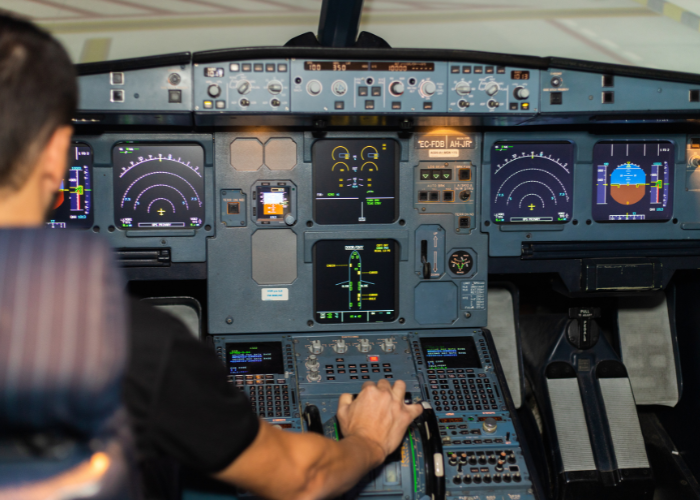
In a revealing conversation, Cristo Santos, who led the exciting A320 FNPT II MCC simulator project at Boost Air Academy, takes us behind the scenes to explore the challenges, the passion and the most memorable moments of building this simulator, unique in Europe.
How would you describe the feeling of successfully certifying the A320 FNPT II MCC simulator, especially as it is a one-of-a-kind project in Europe?
To be completely honest, the end result has exceeded our expectations. Everything we discussed during the project was ideas about how to do it, but once we got stuck in… it was a very different story. Fortunately, we’ve had a fantastic team, everyone really knows their field, and we couldn’t have finished it without them.
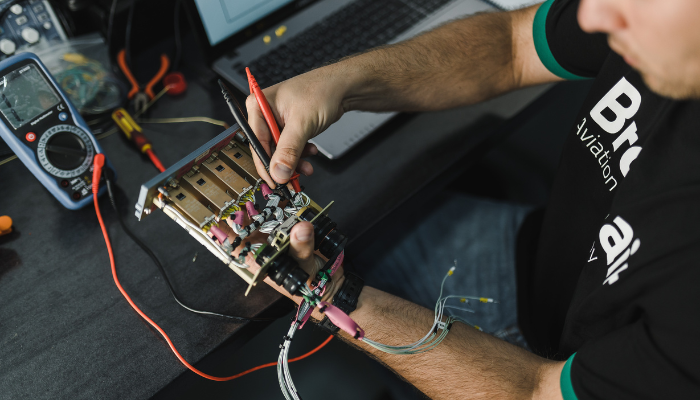
Hiro handled all the wiring and power distribution for the simulator.
Iván installed and removed anything from the A320, because he’s an engineer on that aircraft.
Carena brought her touch and extensive experience to the manuals and records for the approval.
Other colleagues helped with logistics, such as María José, Carlos assembling parts, and the students from our aircraft maintenance courses (especially the 4th intake).
And for me it’s been a very personal project. After years in the world of simulation, I never imagined an opportunity like this would come along, and it did thanks to the academy.
What makes this simulator unique in Europe?
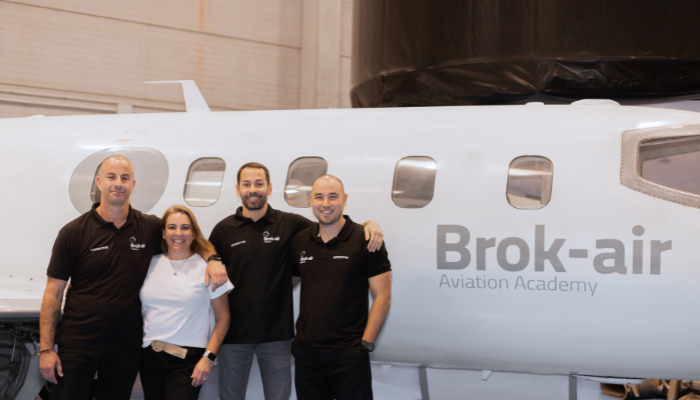
What sets our simulator apart is that it is built with original components from an Airbus A320, installed in an A320 fuselage, and it also includes a passenger cabin with 30 seats.
What makes it unique is that it is certified as an FNPT II MCC, and there is no other one with those features in terms of how it has been built.
Could you tell us how the panels were selected and sourced?
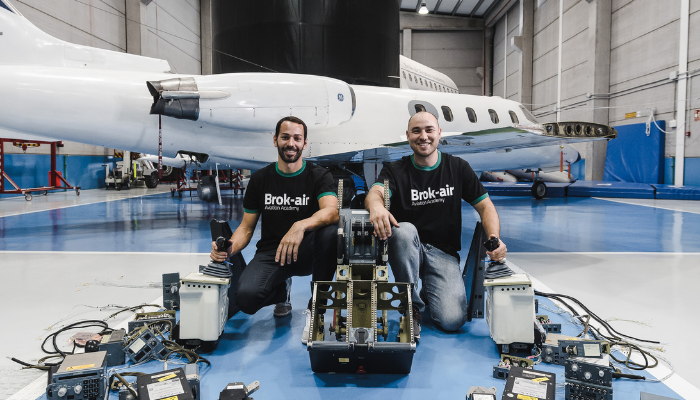
When aircraft reach the end of their service life, there’s a dismantling business, just like with cars. That’s where we looked for them. We have panels from the Netherlands, England, the United States and Asia.
They come from several countries because we also had to find panels with a serial (manufacturing) number that was compatible with what we wanted to build.
How do you think building the simulator has affected your career and your passion for aviation?
From the academy to the development of the project, it’s been a very positive discovery for me.
Professionally, I’ve been able to learn how the certification processes work for the flight simulators we train on, and everything involved in having a device approved by the aviation authority, and keeping it approved.
I’ve also been able to work hand in hand with aircraft engineers, who give you a different perspective from the day-to-day operations we see from the flight deck.
Then, in the build itself, I’ve learned a lot from my colleagues, especially from my other half in this, Hiro, spending many hours with cables, soldering, connections and so on…
And then there’s writing the manuals, which is tedious, but it makes you realise that it’s not all about flying an aircraft or a simulator; there’s a lot of work behind it that also needs to be approved by the authority for everything to run properly.
What level of accuracy and realism did you achieve by using original panels compared with conventional simulators?
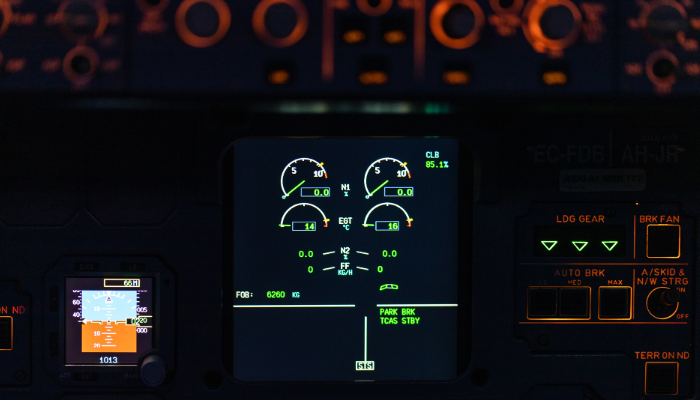
In this case it’s the highest level of realism possible. There’s nothing beyond the aircraft’s original component, and we also have the original structure, so the environment is as real as it gets.
We know you worked alongside your colleague Mitsuhiro Pérez on this project. What would you highlight as the most significant or memorable part of working with him?
As I said before, Hiro is my other half, and without all the planning he did on the distribution and protection of the wiring, we wouldn’t have the simulator finished today.
It’s a privilege to work with Hiro, possibly one of the most committed and motivated people I know. When he came to the interview and we told him about the project, not only was he not put off by how complex it was, he was already suggesting ideas. He’s the kind of person you want on every project.
Which technical aspects were the most challenging during the build?
We went through several stages that were, let’s say, complex.
The first was understanding the Airbus wiring manual and working out how each piece of equipment, light and switch was connected.
The second was understanding how the equipment that needs to send and receive ARINC 429 data works. We had a lot of headaches with the cables that needed to be connected to ground to see the data on the equipment.
And the third was that some equipment runs on a specific aircraft power supply, and we had to convert it to work with a different voltage.
What impact do you think the original panels have on pilots’ training in terms of realism and familiarity with the real aircraft’s cockpit?
Everything. Sitting in the simulator is sitting in the aircraft. It’s a unique experience for students. The feel, the touch… These are components designed for continuous use in demanding conditions.
Of course, a simulator always depends on software that simulates the aircraft’s systems and behaviour really well. Fortunately, we have the best software on the market for this level of certification.
What was the funniest moment during the build?
One day, like any other, we were working on the simulator’s wiring. Suddenly we noticed smoke coming from the overhead panels and quickly cut all the power. We were very worried and, it has to be said, pretty scared.
We looked for the source of the smoke and recreated the situation to see if it happened again. Iván, our A320 engineer, helped us check the fuselage installation to see where the smoke could be coming from.
After hours of searching, we realised that whenever we went up to work on the upper section, we were unknowingly hitting the switch for the smoke generator used in the passenger cabin.
It was funny, but only once we’d figured it out.