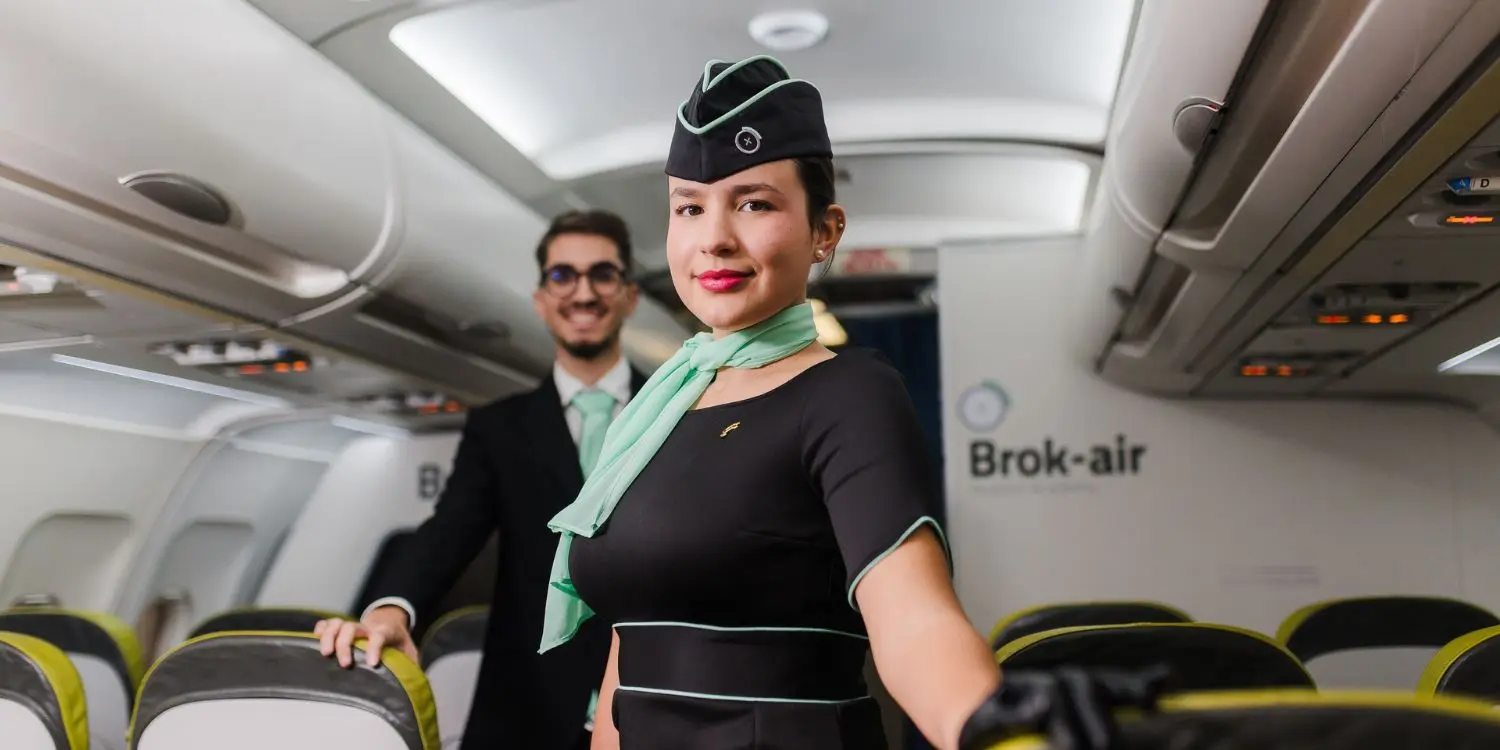
Would you like to work and see the world at the same time? There are plenty of jobs that let you travel and work, combining career development with the chance to discover new places and cultures. From aviation to digital or teaching roles, the opportunities for anyone dreaming of a life on the move are real and within reach.
Jobs that let you travel and earn a living
More and more people are looking for jobs that let them travel and fit a more flexible, rewarding lifestyle. Here are some of the most popular jobs for travelling the world, from technical roles to creative ones.
1. Cabin crew
One of the best-known jobs for people who want to work and travel at the same time is cabin crew, also known as flight attendant. It’s ideal if you enjoy working with people, you’re interested in aviation and you dream of visiting different countries as part of your working day.
What does the job involve?
Cabin crew are responsible for passengers’ safety and comfort during the flight. They are part of the on-board crew and take part in emergency situations, evacuation procedures and first aid, as well as looking after customers before, during and after the flight.
Why is it one of the jobs that let you travel?
As cabin crew, your workplace is always changing. You can fly to different domestic and international destinations every week, with layovers that vary depending on the airline and type of flight. The job lets you explore new places, get to know different cultures and enjoy unique experiences around the world.
What do you need to study to work as cabin crew?
To work as cabin crew you need to complete an official course approved by the aviation authority (AESA in Spain), which includes theoretical and practical training, as well as obtaining an aeromedical certificate and passing a final exam. Specialised academies such as Boost Air Academy can give you the training you need to obtain the Cabin Crew Attestation in around two months, which allows you to work for any European airline. On top of the mandatory content, the training includes additional modules such as professional etiquette, handling disruptive passengers and practical sessions on real aircraft, which greatly improves your skills and your chances of finding a job in aviation.
Becoming cabin crew is a great way into the world of aviation for anyone looking for a career that lets them travel the world without giving up job stability.
Career opportunities
- Commercial airlines
- Charter flights
- Business aviation
- Private jet companies
- Low-cost or premium airlines
2. Flying Spanner (Aircraft Maintenance Engineer)
If you love aviation from a technical point of view and want a career with international scope, working as a Flying Spanner could be a great option. This role combines specialist aircraft maintenance knowledge with the availability to travel to different airports, often at short notice.
What does the job involve?
A Flying Spanner is an aircraft maintenance engineer who travels with the aircraft on its routes, or flies out on demand, to carry out specific line maintenance tasks. Their main job is to make sure the aircraft is in perfect condition to keep operating, fixing any issues that come up between flights.
The role requires strong troubleshooting skills, up-to-date knowledge of aircraft systems and a great sense of responsibility, as it involves working under pressure and to very tight deadlines.
Why is it one of the jobs that let you travel?
A Flying Spanner goes wherever the aircraft needs them, which means travelling frequently to different domestic and international airports. They are often part of AOG (Aircraft on Ground) missions, where every job can mean a new city or country. It’s definitely one of the careers that let you travel with a highly specialised technical profile.
What do you need to study to work as a Flying Spanner?
To work as a Flying Spanner you need to train as an Aircraft Maintenance Engineer and obtain a B1 or B2 Maintenance Licence (EASA Part 66), as well as the type rating for the specific aircraft you will be working on. This training is delivered at approved centres and combines theory with hands-on experience, giving you complete preparation tailored to the demands of the industry.
Becoming a Flying Spanner is a great option for aircraft maintenance engineers who want to combine the stability of a skilled profession with the excitement of travelling, solving technical challenges and working in a dynamic, global environment.
Career opportunities
- MRO (Maintenance, Repair and Overhaul) companies
- Airlines operating from multiple bases
- International AOG services
- Business or cargo fleet operators
3. Digital nomad
The term digital nomad has become popular in recent years to describe people who work remotely while travelling, without being tied to a physical office. This way of living and working has grown with digitalisation and the spread of remote work across many sectors.
What does the job involve?
Being a digital nomad isn’t a profession in itself, but a way of working. It covers a wide range of jobs that can be done with just a laptop and an internet connection. People who choose this lifestyle can work as remote employees or as freelancers, choosing where and when they work.
Why is it one of the jobs that let you travel?
What makes being a digital nomad one of the most accessible ways to work and travel at the same time is its flexibility. You can move to a new city or country whenever you like without it affecting your job. Many choose to spend time in different places, from European capitals to tropical destinations, while keeping their projects or clients going.
What do you need to study to work as a digital nomad?
There’s no single training path to becoming a digital nomad, but there are certain in-demand areas that let you work remotely from anywhere in the world. Some of the most common are:
- Digital marketing: SEO, social media management, online advertising.
- Graphic and web design
- Software development and programming
- Content writing and copywriting
- Translation and proofreading
- Remote customer service or technical support
- Virtual assistance
- Online consultancy in different fields
Career opportunities
- Freelancing or self-employment in digital sectors
- Remote jobs at start-ups and tech companies
- Your own projects (e-commerce, blogs, digital products)
- Remote work platforms (Upwork, Freelancer, Workana, Malt)
4. Language teacher abroad
Working as a language teacher abroad is ideal for anyone who wants to combine a love of teaching with the wish to travel the world. It’s a profession in high demand, especially for native English or Spanish speakers, and offers a fully immersive experience in other cultures.
What does the job involve?
Language teachers teach their native language or a foreign language to students of different levels, ages and backgrounds: from schools and universities to private academies or one-to-one lessons. Teaching methods vary, but they all require a solid linguistic foundation and good communication skills.
Many teachers work in person in other countries, while others choose to teach online from anywhere.
Why is it one of the jobs that let you travel?
Language teaching is one of the easiest careers to combine with travel. There are exchange programmes, agreements between countries and academies that recruit international teachers every year. You can work in Asia, Europe, Latin America or anywhere in the world where there’s interest in the language you speak.
This profession also lets you experience genuine cultural immersion, meet local people, learn new languages and build lasting connections in the countries where you teach.
What do you need to study to work as a language teacher?
To teach a language abroad, employers value:
A university degree related to philology, translation, education or foreign languages.
Specific certifications, such as CELTA or TEFL to teach English, or ELE (Spanish as a Foreign Language) courses to teach Spanish.
Teaching experience and a good command of teaching and digital tools.
It also helps to have a basic knowledge of the language of the destination country and to show an ability to adapt to other cultures.
Teaching languages abroad isn’t just a way to work while travelling; it’s also an opportunity for personal and professional growth in a global environment.
Career opportunities
- Language academies abroad
- International schools and universities
- Educational exchange programmes (such as language assistant programmes)
- Private lessons in person or online
- Online teaching platforms
5. Commercial pilot
Commercial pilot is without doubt one of the first jobs that comes to mind when we talk about careers that let you travel. If you’ve always dreamed of flying and seeing the world from the flight deck, this could be the perfect career for you. It’s a demanding profession, but also highly valued and with great international prospects.
What does the job involve?
A commercial pilot operates passenger or cargo aircraft, strictly following the procedures set by the airline and the aviation authorities. As well as flying, they handle flight planning, weather analysis, communications with air traffic control and overall safety on board.
The job is done in coordination with the co-pilot, the cabin crew and the ground team, and requires a professional attitude, quick reactions and the ability to make decisions under pressure.
Why is it one of the jobs that let you travel?
Few professions let you work and travel at the same time like being a pilot. Routes can change every week, so you’re constantly in contact with different cities, countries and cultures. Although the work takes place in and around the aircraft and the airport, pilots usually have rest time at their destination to explore and enjoy new places.
Working for international airlines or on long-haul flights opens up even more destinations.
What do you need to study to become a pilot?
To work as a commercial pilot you need a CPL (Commercial Pilot Licence), issued by an aviation authority such as AESA in Spain. You can get this licence through a modular or integrated course, both delivered by ATOs (Approved Training Organisations).
The training includes:
Theoretical studies (navigation, meteorology, air law, aircraft systems, etc.)
Simulator training
A minimum of 200 flight hours (depending on the type of course)
A Class 1 medical
Aviation English (mandatory)
In many cases, future pilots start with a PPL (Private Pilot Licence) before moving on to the CPL.
Career opportunities
Becoming a commercial pilot is a vocation that requires commitment and discipline, but it offers one of the most respected and stable careers that let you travel the world.
- Commercial airlines (domestic and international)
- Business or private aviation
- Air cargo
- Specialised aerial work (surveillance, photography, firefighting)
- Flight instruction
6. Jobs on cruise ships
The cruise industry offers a wide variety of jobs that let you travel by sea and discover some of the most stunning destinations in the world. From operational roles to customer service, entertainment or catering, working on a cruise ship is a unique experience for anyone looking to combine work and adventure.
What does the job involve?
Working on a cruise ship means being part of an international crew. Cruise ships are real floating cities and need qualified staff in every area: from waiters, chefs and receptionists to technicians, entertainers, musicians, medical staff and housekeeping.
Shifts are usually intensive but organised by season, and accommodation, meals and other services are included, which makes it easier to save.
Why is it one of the jobs that let you travel?
Cruise ships sail around the Mediterranean, the Caribbean, North America, Asia or even around the world. As part of the crew, you visit many ports and tourist destinations, often with the chance to go ashore during stopovers. This makes cruise ship work one of the most direct ways to work and travel at the same time, with a multicultural community and a rewarding professional experience.
What do you need to study to work on cruise ships?
There’s no single valid qualification, as the roles are very varied, but these studies and skills will improve your chances:
- Training in hospitality, tourism or catering
- Experience in customer service or entertainment
- Technical knowledge (electrical, sound, maintenance, etc.)
- Languages (especially English)
- Specific maritime safety courses (STCW)
- Many cruise lines run their own recruitment processes and in-house training before you embark.
Working on cruise ships is a great opportunity for anyone looking for international experience who wants to improve their language skills and have a career that lets them travel while meeting people and cultures from all over the world.
Career opportunities
- International cruise lines
- Themed or luxury cruises
- Passenger ferries
- River or expedition cruises
Is it worth living a life of travel and work?
The answer depends on your personal and professional priorities, but for many people having a job that lets them travel and work at the same time has been life-changing. Combining work and travel doesn’t just let you see the world; it also helps you grow professionally in dynamic, multicultural environments with new perspectives.
However, this lifestyle isn’t without its challenges: it requires constant adaptation, good planning and a real passion for what you do. It’s important to choose a profession that not only lets you move around, but that you also love and that has real prospects.
In sectors like aviation, this way of life isn’t a trend but an established professional reality. Becoming cabin crew, a commercial pilot or a Flying Spanner doesn’t just open the doors to the world; it gives you a structured career, with regulated training and opportunities for steady growth internationally.
| Pros and cons of travelling and working at the same time | |
|---|---|
| Pros | Cons |
| Geographical freedom in remote jobs such as digital nomad or online teacher | Financial instability in freelance or seasonal jobs (photographer, cruise ships, teacher) |
| Access to international destinations as part of the job (pilot, cabin crew, flying spanner, cruise ships) | Demanding or irregular hours, especially in aviation and on-board hospitality |
| Personal and cultural growth from living alongside international crews or communities | An unsettled social life due to constant travel and long periods away from home |
| Practical, specialised training that improves your global employability (EASA licences, languages, STCW) | Dependence on local permits and regulations (visas, foreign licences, tax) |
| A variety of work environments: from an airport to a ship or an academy abroad | Difficulty keeping stable personal or work routines in the long term |
| A sense of purpose in jobs with a direct impact on people and international operations | Difficulty separating leisure and work, especially when you’re always on the move |